
Heavy rainfall can transform even a well-planned property into a soggy, waterlogged site within minutes. Whether it’s residential land, commercial development, or rural acreage, water pooling after rain is more than just an inconvenience it poses serious risks to structures, access, landscaping, and future development.
At Next Stage Civil, we specialise in identifying and resolving drainage problems across the Shoalhaven region. With expertise in earthmoving and civil engineering, we help property owners and developers eliminate unwanted water buildup and protect their sites from persistent moisture damage.
Why Does Water Pool After Rain?
Water pooling occurs when the surface or subsurface drainage capacity of a site is overwhelmed. In simple terms:
- Poor grading or land slope prevents water from moving away from structures.
- Compacted or clay soils limit water infiltration, causing runoff to collect.
- Blocked natural flow paths (like swales or gullies) redirect water into low spots.
- Inadequate drainage infrastructure, such as undersized or absent pipes, fails to move water efficiently.
Without effective water management, these conditions lead to muddy patches, structural risk, pest issues, and long-term soil instability.
How Civil Construction Solves Drainage Problems
At Next Stage Civil, we approach water pooling with a combination of smart design, robust earthmoving, and tailored drainage solutions that stand up to the Shoalhaven’s wet weather.
✔️ 1. Site Assessment and Surface Grading
The first step is a thorough site evaluation. We analyse:
- The natural contours of the land
- Existing high and low points where water accumulates
- Soil composition and permeability
- Historical drainage issues
From here, we design a grading plan that gently re-shapes your land to encourage water to flow toward drains, away from buildings, and into safe discharge areas.
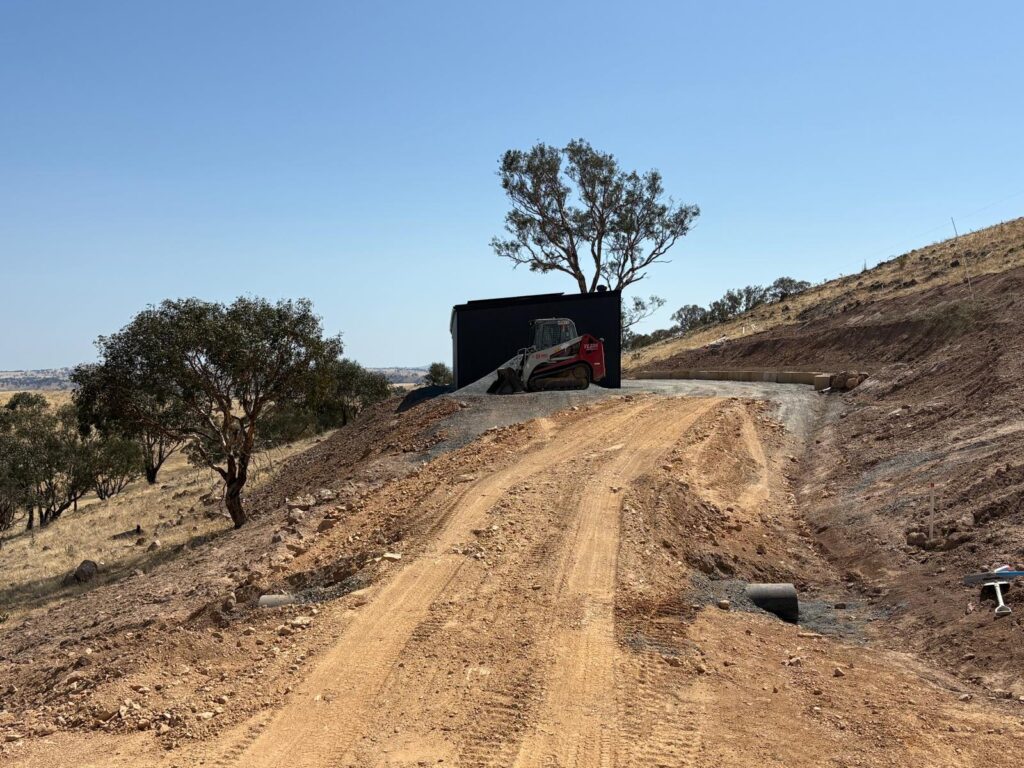
✔️ 2. Earthmoving for Effective Water Flow
Using heavy machinery, we:
- Cut and fill high points
- Elevate low-lying areas that collect water
- Build swales (shallow channels) to guide runoff
These adjustments make use of physics: water always flows downhill. By reshaping the ground, we remove the “traps” where water pools.
✔️ 3. Installing Drainage Infrastructure
For many sites, gravity alone isn’t enough. That’s where engineered drainage comes in:
- French drains — gravel-filled trenches with perforated pipe to capture and redirect water
- Stormwater pipes and culverts — move water efficiently under roads and driveways
- Catch basins and pits — collect surface water for controlled removal
These systems work together to ensure excess rainwater is intercepted quickly and moved to appropriate outlets or storage areas.
✔️ 4. Erosion Control and Soil Stabilisation
Excess water doesn’t just pool it can wash soil away. To protect graded surfaces, we install:
- Geotextile fabrics
- Erosion mats
- Vegetated buffer strips
These solutions reinforce soil, improve infiltration, and prevent sediment movement during heavy rain.
Why Proper Drainage Matters for Shoalhaven Properties
The Shoalhaven climate, with occasional intense rainfall, makes drainage planning essential. Poor water management can lead to:
- Foundation and infrastructure damage
- Increased maintenance costs
- Limited usability of outdoor spaces
- Environmental concerns from uncontrolled runoff
By combining earthmoving expertise with civil construction best practices, we help property owners mitigate these risks and add long-term value to their land.
Ready to Solve Your Water Pooling Problems?
Whether it’s a residential block, agricultural paddock, or commercial development site, Next Stage Civil specialises in tailored drainage solutions across civil construction Shoalhaven. With precision grading, engineered systems, and expert project delivery, we ensure your land stays dry, stable, and usable year-round.
👉 Contact us today to schedule your site assessment and take the first step toward effective rainwater management.